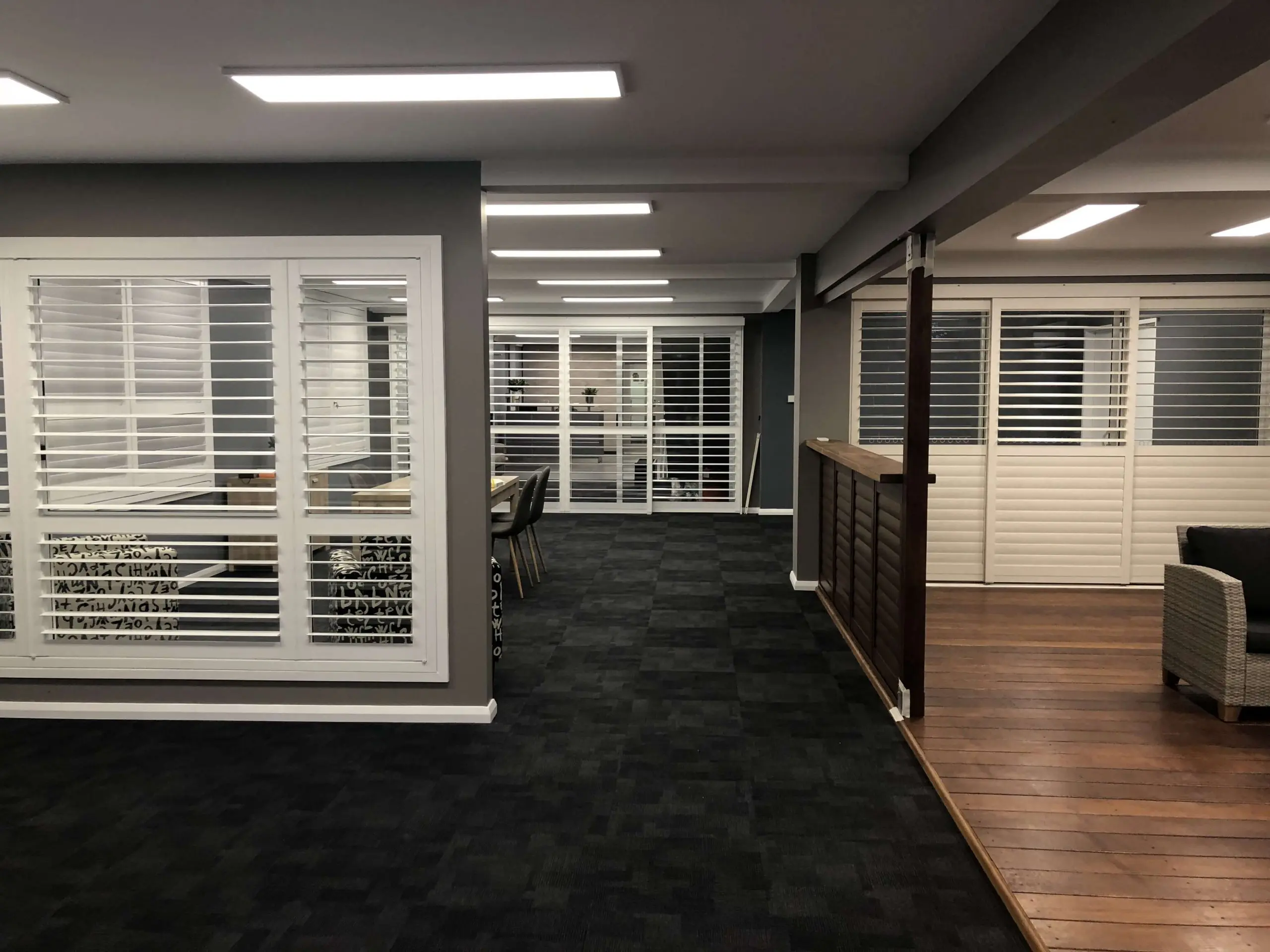
Custom solutions for residential and commercial spaces across Newcastle and surrounding areas.
Many properties require adaptable solutions for privacy and light control without major structural changes.
These options are suited to living rooms, hallways, meeting areas, and reception spaces. They can also be installed in verandahs and internal voids where straightforward screening is needed.
Many properties require adaptable solutions for privacy and light control without major structural changes. Room dividers create separate zones within open spaces. Interior shutters reduce glare while maintaining airflow. Privacy screens limit views from streets or neighbouring properties.
These options are suited to living rooms, hallways, meeting areas, and reception spaces. They can also be installed in verandahs and internal voids where straightforward screening is needed. This page outlines common applications, available configurations, materials, installation process, and maintenance guidance to help select the most suitable option and request an accurate quote.
Create a study nook in a large lounge, add separation between kitchen and dining, or screen a stair void. Increase privacy at street-facing rooms while keeping light.
Partition staff areas, define waiting zones, or screen glass frontages that face public walkways while keeping signage visible.
Select blade size and spacing to control view-through, shade, and airflow. Tighter spacing increases privacy. Wider spacing increases light and ventilation. Fixed blades are available where a set angle is preferred for screening or street outlooks.
Aluminium construction with powder-coated finishes in standard colours and custom options on request. Components and fasteners are selected for interior use or sheltered external positions. Finish selection aims to match existing palettes for a consistent look across rooms and entries.
A site check confirms openings, fixing points, track lines, and clearances for doors, furniture, and walkways. Installers set tracks or hinges, fit panels, and test movement and stops. For sliding units, bottom guides or top-hung systems are chosen based on floor finish and thresholds. Handover covers safe operation, cleaning, and warranty terms.
Wipe powder-coated surfaces with mild soap and water. Avoid abrasive pads and strong solvents. Check tracks and guides for debris. Tighten visible fixings during regular cleaning cycles. Report impact damage for assessment before use.
Panels and tracks are fixed to suitable framing or masonry with hardware rated for the substrate. Clear egress and access are kept where required. Edges are finished to reduce pinch points. Where installed in commercial spaces, placement considers walkways and signage lines.

Sliding and hinged panels can be removed or reconfigured if track lines and openings allow.
Blade spacing and panel layout control airflow. Wider gaps and offset panels maintain ventilation.
Use fixed blades at set angles or tighter spacing to reduce sightlines from outside.